

The essentials
What the program does
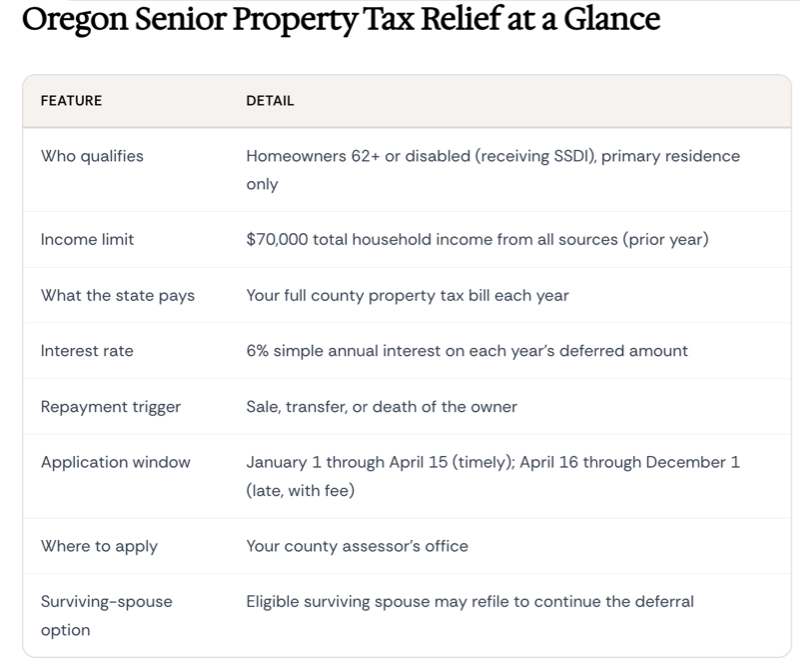
If an application is approved, the State of Oregon pays the property taxes directly to the county. The deferred taxes become a lien against the property and accrue 6% simple interest. No monthly payment is required while the homeowner remains eligible.
Who may qualify
- Homeowners who are at least 62 by April 15 of the application year, or who qualify based on disability.
- Applicants who meet current household income, net-worth, home-equity, residency, and property requirements.
- A home held in a revocable trust may qualify. Other ownership arrangements can affect eligibility.
Irrevocable trusts, life estates, and reverse mortgages may affect eligibility. Confirm your specific situation with your county assessor or the Oregon Department of Revenue before applying.
Benefit and cost
Potential benefit
The state pays the approved property-tax bill to the county, allowing the homeowner to keep that money available for living expenses during the year.
Long-term cost
Each deferred payment and its simple interest become part of a property lien. Repayment is generally due after the home is sold, the homeowner moves, the homeowner dies, or another disqualifying event occurs.
At a glance
How to apply
- Review the current eligibility rules and application materials.
- Gather income, ownership or trust, identity, and insurance documents requested by the program.
- File with your county assessor, generally between January 1 and April 15.